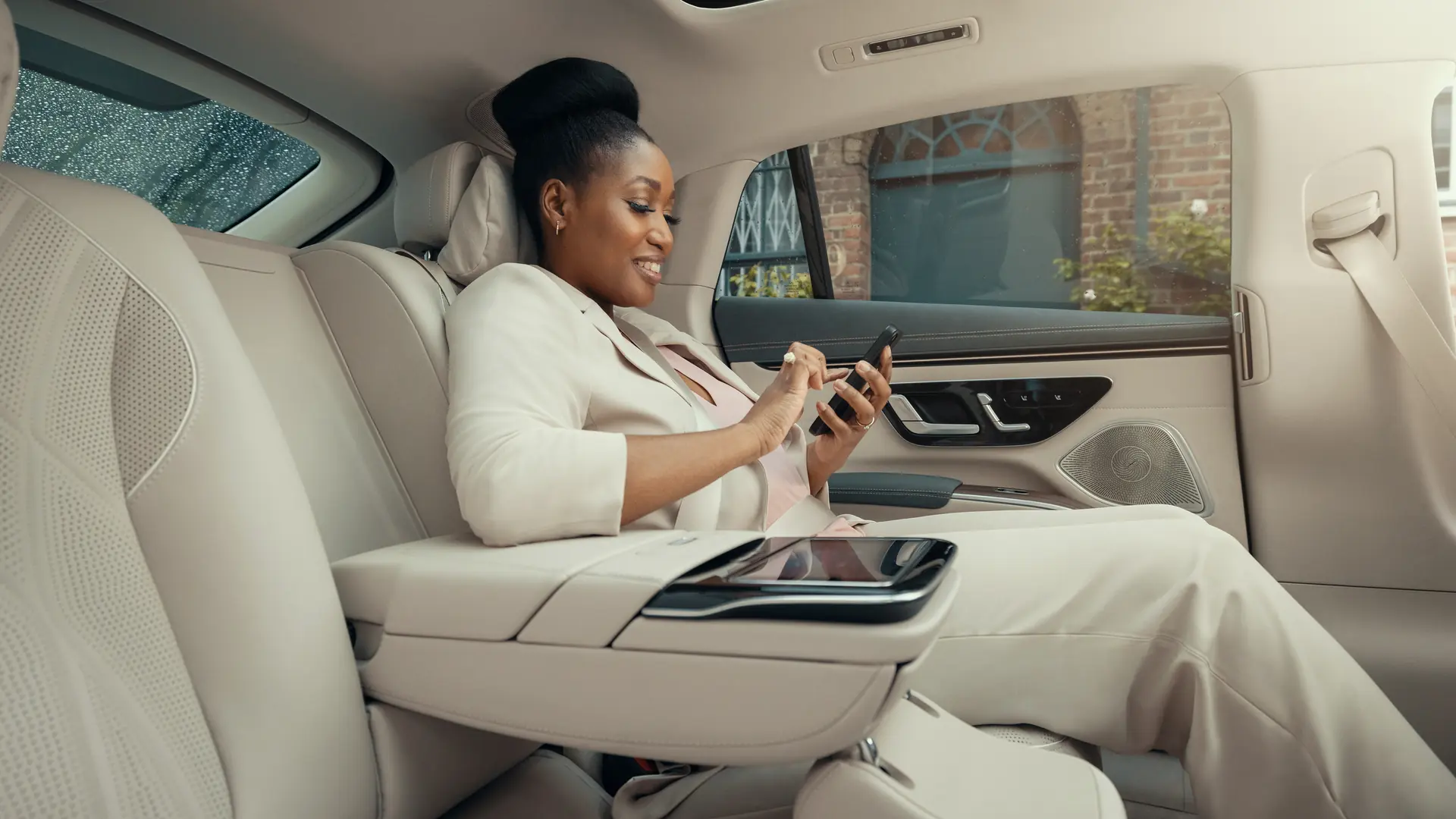
Executive assistants and corporate travel managers in Atlanta ask the same question every week: should we book an executive sedan or an executive SUV for this trip? Most of the time the right answer is obvious — one passenger going to ATL takes a sedan, a family of four taking a week of luggage takes an SUV. But the cases in the middle are where firms get it wrong, and the wrong vehicle costs more than the upgrade would have.
This is the decision framework we use at Chauffeurs Lane after a decade of dispatching ground transportation for Atlanta law firms, private equity shops, and Fortune 500 corporate travel programs. Use it before you book.
The Three Variables That Actually Decide
Vehicle choice is a function of three things, in this order:
- Passenger count + luggage volume — the hard constraint
- Principal preference — when there is a principal with a known preference, that wins
- Trip profile — airport vs. point-to-point vs. day rate, plus duration
If you get the first one wrong, no amount of trip-profile reasoning fixes it. Lead with capacity. Then layer in preference and profile.
When the Executive Sedan Is the Right Vehicle
The understated executive sedan — a Volvo S90 or equivalent — and the Mercedes-Benz S-Class are the canonical Atlanta executive sedan choices. They are the right vehicle when:
1 to 2 passengers + standard business luggage. One roller + one briefcase per passenger fits comfortably in any executive sedan. Two roller bags + a garment bag fits in an executive sedan trunk without challenge. An executive sedan trunk is tight with three large rollers; if you have a third passenger going to ATL, or two passengers with checked bags plus extras, step up to the SUV.
The principal prefers a sedan. Some principals — particularly in legal and finance — prefer the lower-profile arrival of a sedan over an SUV. If your principal is one of them, book accordingly. The sedan signals different things in different cities; in Atlanta, the S-Class signals "senior partner" while the Escalade signals "deal team or family travel."
Point-to-point business trips inside the perimeter. Office to court, hotel to dinner, Buckhead to Midtown. The sedan is faster door-to-door because it parks easier, accesses tight pickup zones, and signals a different category of vehicle to the doorman at the destination. For a single executive moving across town, the sedan is the right call.
Deposition arrivals + corporate client dinners. Both contexts favor the sedan profile. Depositions are quiet professional events; the sedan matches that register. Client dinners at the St. Regis or the Mandarin are sedan-default unless the party is more than two.
For these trips, see our executive sedan Atlanta service — the owned standard is an executive sedan (Volvo S90 or equivalent), with the Mercedes-Benz S-Class and Maybach available on request — all current model years, all NDA chauffeurs.
When the Executive SUV Is the Right Vehicle
The Cadillac Escalade ESV, GMC Yukon XL, and Chevrolet Suburban — the Atlanta executive SUV fleet — are the right vehicle when:
4 to 6 passengers OR a passenger count of 2 with significant luggage. Two passengers with three checked bags + carry-ons in an executive sedan trunk is uncomfortable; in an Escalade ESV cargo area it is trivial. If you are uncertain on luggage volume, default up to the SUV. The marginal cost is small; the risk of the principal arriving at ATL and not having space for their bags is larger.
Group ATL transfers with family or guests. A family of four flying home from a week in Atlanta — two adults, two kids, four large checked bags, four carry-ons — needs the executive SUV Atlanta service. The Escalade ESV swallows that load with the third row up. A Suburban accomplishes the same thing with a touch more cargo room; a GMC Yukon XL — built on the same GM long-wheelbase platform as the Escalade ESV — handles the identical load.
Deal teams moving together. When the M&A team or PE deal team needs to stay together for a roadshow day, the SUV holds 4-6 people plus laptop bags. Splitting a deal team across two sedans is a cost and coordination problem — and it sends a worse signal than arriving as a unit in a single vehicle.
Principal with a security detail. When the principal travels with executive protection, the SUV accommodates the principal plus their detail in the same vehicle. Forcing the principal into a sedan while EP follows in another vehicle creates a coordination gap that experienced security teams will not accept.
Hospitality + event nights. FIFA World Cup 2026 suite holders, Mercedes-Benz Stadium hospitality, Truist Park box seats, the Peach Bowl. Sponsor groups of 4-6 move together; the SUV is the right vehicle. Splitting a sponsor group across two sedans for an event arrival is a hospitality miss.
The Four Mistakes That Cost Firms a Partner
These are the four scenarios where the wrong vehicle has actually cost firms an account at the partner level. Worth memorizing.
1. Booking a sedan for a family of four going to ATL. The principal arrives at the curb, sees the sedan, and immediately knows the assistant did not think it through. The 30-second luggage-fitting drama before pulling away is the entire problem. Always over-vehicle for family travel.
2. Booking an SUV for a single principal doing a downtown depo. The principal pulls up at the deposition center in an Escalade. The opposing counsel sees the vehicle. The principal feels conspicuous. Sedans for legal, SUVs for everything else by default.
3. Booking two sedans for a deal team that should have taken one SUV. The team arrives in two vehicles. The senior associate gets out of one car; the partner gets out of the other; they coordinate on the sidewalk. The signal to the room they are walking into is fractured. One SUV solves it.
4. Booking a sedan for the principal and an SUV for their detail. EP follows the principal as a matter of operational rule. If the protection is in a separate vehicle, the principal is exposed in transit. Always seat the detail in the principal's vehicle.
What About Sprinter Vans and Larger Groups?
For groups of 7 to 12 passengers, you are out of the sedan-vs-SUV decision and into the Mercedes V-Class or Sprinter van category. Browse our ride options for fleet capacity beyond the standard executive lineup. Sprinter vans are common for corporate hospitality groups, family-office multi-generational travel, and roadshow teams that travel with support staff.
How to Book
When in doubt, default up: if the trip might need an SUV, book the SUV. The cost differential is smaller than the principal's frustration if the vehicle is too small. For recurring travel where the trip profile is repeatable, set the default vehicle class on your corporate account so the EA does not have to make the decision every booking.
For one-off bookings, call dispatch at (770) 310-8765 with the passenger count, luggage volume, and trip profile — we will tell you which vehicle the existing fleet will dispatch and why.
The wrong vehicle is a small mistake that signals a larger one. The right vehicle is invisible. That is the goal.
Ready when you are
Book a chauffeur — or talk to dispatch.
Reserve online in a few clicks, or speak with someone who knows the Atlanta roads as well as the calendar.